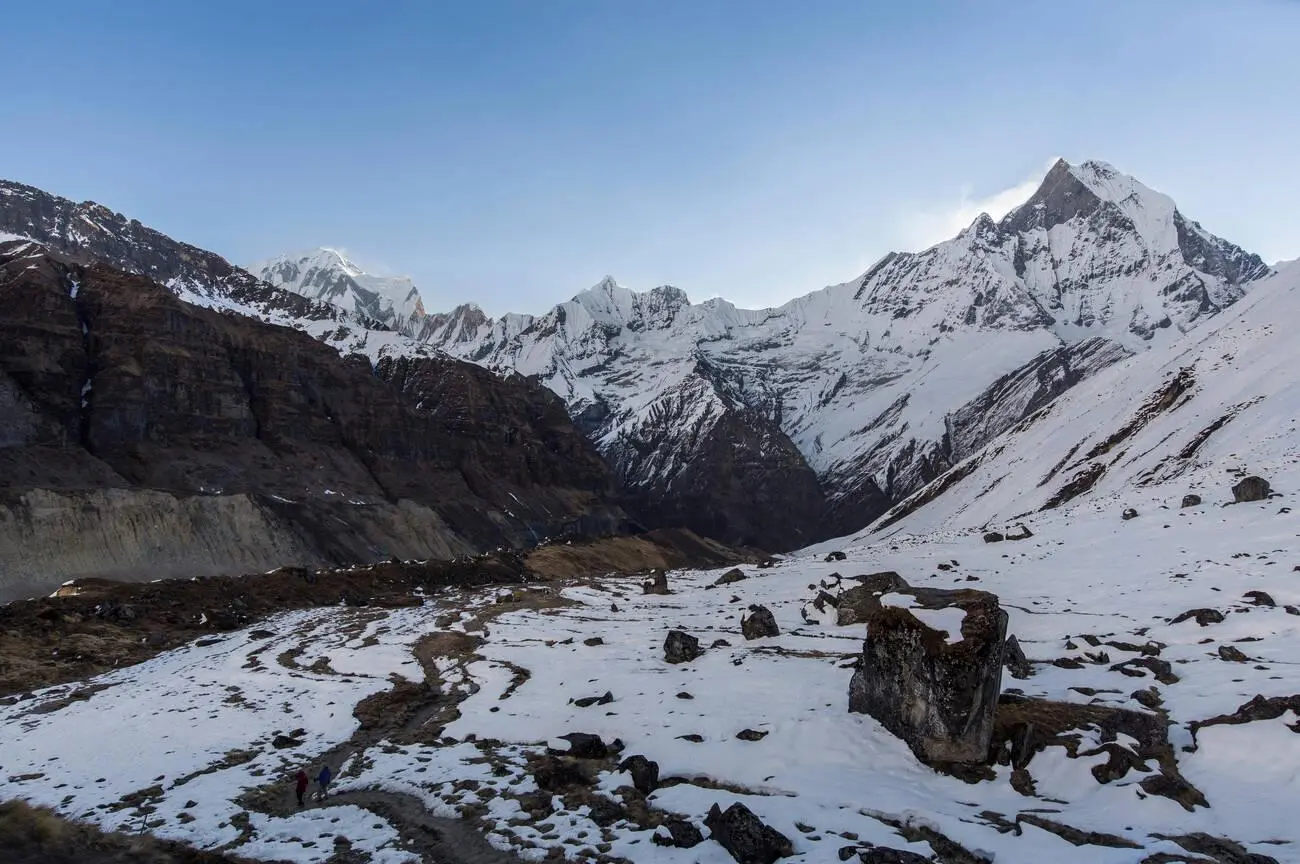
The Annapurna Base Camp (ABC) Trek is one of Nepal’s most iconic trekking experiences, offering breathtaking views of the Annapurna Massif, Machapuchare (Fishtail), and numerous surrounding peaks. Starting from the bustling city of Kathmandu, the journey takes you through serene villages, lush rhododendron forests, cascading waterfalls, and diverse landscapes that shift from subtropical valleys to alpine terrain. Trekkers are rewarded with a spectacular sunrise over the Annapurna range at the base camp, an unforgettable experience for adventure enthusiasts and photographers alike.
The trek typically begins with a scenic drive from Kathmandu to Pokhara, followed by a drive to Nayapul where the trekking route starts. Along the trail, you will pass through traditional Gurung villages like Ghandruk and Chomrong, offering insights into the local culture, lifestyle, and hospitality. Each stage of the trek gradually increases in altitude, allowing trekkers to acclimatize properly and enjoy the diverse flora and fauna of the Annapurna region.
The ideal time to undertake the Annapurna Base Camp Trek is during the pre-monsoon (March to May) and post-monsoon (September to November) seasons. These periods offer clear skies, moderate temperatures, and excellent visibility for viewing the Himalayan peaks. During spring, the trails are adorned with blooming rhododendrons and wildflowers, while autumn brings crisp air and vibrant landscapes, making photography especially rewarding.
Winter (December to February) is also possible but colder, with snow at higher altitudes, while the monsoon season (June to August) can make the trails slippery, increase leeches, and block mountain views due to heavy clouds and rain.
Quick Points:
The ABC Trek is considered moderate in difficulty, making it suitable for trekkers with a reasonable level of fitness. Although the trail includes steep ascents and descents, proper acclimatization over several days makes it manageable for most hikers. The highest point, Annapurna Base Camp (4,130m), is challenging but achievable for determined trekkers. Daily trekking distances range from 4–7 hours, allowing time to rest, acclimatize, and enjoy the scenery.
Transportation begins with a tourist bus from Kathmandu to Pokhara, offering scenic views of the Trishuli River and Nepal’s hilly landscapes. From Pokhara, a short drive to Nayapul marks the start of the trekking trail. Local buses, taxis, or private vehicles are also options depending on your schedule and preference.
Key Points:
During the ABC trek, accommodation is primarily in teahouses or lodges, offering basic but comfortable rooms with beds and shared bathrooms. Facilities become more rustic as you ascend, but meals are always available. These lodges are usually run by local families, providing a chance to experience Nepali hospitality.
The food is a mix of Nepali, Tibetan, and western dishes, including dal bhat (lentil rice), momos (dumplings), noodles, pasta, and soups. Staying hydrated is important, and boiled or bottled water is recommended. Energy-rich meals help trekkers tackle steep trails and colder nights, while tea and coffee breaks in local teahouses provide a perfect opportunity to rest and enjoy the mountain views.
Highlights:
Trekking in the Annapurna region requires specific permits to ensure safety, conservation, and local development. The Annapurna Conservation Area Permit (ACAP) and the Trekkers’ Information Management System (TIMS) card are mandatory. These permits can be obtained in Kathmandu or Pokhara before starting the trek and are checked at entry points along the trail.
Permit Details:
Choosing Mountain King Adventures ensures a safe, well-organized, and memorable trekking experience. With experienced guides, comfortable logistics, and a strong focus on customer satisfaction, the company caters to both first-time and seasoned trekkers. They provide personalized itineraries, cultural insights, and professional support throughout the journey, making the trek not just a physical adventure but also a cultural and spiritual experience.
Mountain King Adventures prioritizes safety, acclimatization, and eco-friendly practices. Their team handles all permits, transportation, accommodation bookings, and local meals, allowing trekkers to fully immerse themselves in the beauty of the Annapurna region without worrying about logistics.
Why Choose Mountain King Adventures:
Upon arrival at Tribhuvan International Airport in Kathmandu, our friendly representative from Mountain King Adventures will welcome you and transfer you to your hotel in the heart of the city. After settling in, you will have the evening free to rest or take a short walk around the bustling streets of Thamel, experiencing the vibrant culture and local flavors. Your guide will brief you on the upcoming trek, helping with any last-minute preparations, gear checks, and permits. Overnight stay in Kathmandu ensures you are well-rested for the adventure ahead.
Today is dedicated to exploring the cultural and historical highlights of Kathmandu. With your guide, you will visit the UNESCO World Heritage Sites, including the sacred Pashupatinath Temple, the serene Boudhanath Stupa, and the ancient Durbar Square. Each site offers a glimpse into Nepal’s rich history and religious traditions. Your guide from Mountain King Adventures will explain the significance of these landmarks, making your sightseeing experience insightful and meaningful. In the evening, return to your hotel to relax and enjoy a traditional Nepali dinner before preparing for the journey to Pokhara.
After breakfast, embark on a scenic drive to Pokhara, a journey of approximately 6–7 hours. The route follows the Trishuli River, passing charming villages, terraced fields, and roadside markets. Upon arrival in Pokhara, the gateway to the Annapurna region, check in to your hotel and enjoy panoramic views of the Himalayas from the lakeside. Spend the evening strolling along Phewa Lake or exploring the lively local markets. Mountain King Adventures staff will review the trek itinerary, ensuring all equipment and necessities are ready for the start of the trek.
Begin your trekking adventure with a short drive from Pokhara to Nayapul, the starting point of the trail. The trek to Ghandruk takes you through terraced fields, charming villages, and lush forests, offering your first breathtaking views of the Annapurna and Machapuchare peaks. Ghandruk, a traditional Gurung village, is famous for its stone houses and cultural heritage. The hike is moderate, allowing you to acclimatize while enjoying spectacular mountain vistas. Overnight stay in a teahouse in Ghandruk, where local hospitality and home-cooked meals await you.
Today, you will trek through rhododendron forests and terraced farmland to reach Chomrong, one of the most scenic villages in the Annapurna region. Along the trail, enjoy stunning views of Annapurna South, Hiunchuli, and Machapuchare. The path includes some uphill climbs, but the rewarding panorama and serene atmosphere make it worthwhile. Chomrong is a vibrant village with stone houses and lively local markets, providing an authentic cultural experience. Overnight stay in a comfortable teahouse allows you to rest and prepare for the next day’s higher-altitude trek.
The trek today leads you deeper into the Annapurna Sanctuary. You will descend into the Chomrong Khola valley and then gradually ascend through bamboo forests, waterfalls, and suspension bridges. The path becomes more rugged, giving a sense of adventure while offering views of snow-capped peaks above. Dovan is a peaceful campsite nestled between dense forests and mountain streams. Overnight in a cozy teahouse in Dovan provides a chance to rest and enjoy the tranquility of the mountains, listening to the gentle sounds of nature.
As you continue higher, the trail becomes steeper and the landscape more dramatic. Trek through alpine vegetation, rocky trails, and river crossings, gradually gaining altitude to reach Deurali. On the way, you will be surrounded by awe-inspiring views of Annapurna and Machapuchare, with the air becoming cooler and crisper. Deurali is a small settlement where trekkers typically spend the night to acclimatize. The teahouses here provide basic but comfortable accommodations and hearty meals to keep you energized for the demanding trek ahead.
This is the highlight of your trek. The trail winds through moraine paths and glaciers, with increasingly spectacular views of Annapurna I, II, III, IV, and Machapuchare. Upon reaching the Annapurna Base Camp, you will be surrounded by a breathtaking amphitheater of towering peaks and glacial landscapes. Spend time soaking in the panoramic vistas, capturing photographs, and enjoying the sense of achievement. Overnight at ABC allows you to witness the sunset and sunrise over the majestic peaks, creating an unforgettable experience high in the Himalayas.
After a memorable morning at ABC, begin your descent to Bamboo, retracing your steps through the Annapurna Sanctuary. The trek downhill is easier on the legs but still offers stunning views of the mountains and glaciers. Pass through lush forests and charming villages, experiencing the local way of life along the trail. Bamboo is a serene and quiet stopover, surrounded by rhododendron forests and waterfalls. Overnight stay in a teahouse provides warmth and comfort after a long day of trekking.
Continue your descent through beautiful forested trails, enjoying the soothing sounds of mountain streams and the aroma of pine and rhododendron. The trail to Jhinu Danda is scenic, with occasional views of the Machapuchare and Annapurna peaks in the distance. Jhinu Danda is famous for its natural hot springs, providing trekkers an ideal spot to relax and rejuvenate tired muscles. Spend the evening soaking in the hot springs and sharing stories with fellow trekkers, while enjoying a comfortable overnight stay in a local teahouse.
From Jhinu Danda, trek down to Nayapul, where your transport will be waiting to take you back to Pokhara. The trail passes through lush forests, charming villages, and terraced farmland, allowing a reflective journey as you descend from the mountains. Upon arrival in Pokhara, check into your lakeside hotel, relax, and celebrate the successful completion of your trek. Enjoy an evening by Phewa Lake or explore the vibrant lakeside market, reflecting on the incredible landscapes and experiences of the Annapurna region.
Depart Pokhara in the morning for the drive back to Kathmandu. The journey along the scenic Prithvi Highway provides views of rivers, cliffs, and distant hills, allowing you to reminisce about the trek. Upon arrival in Kathmandu, check into your hotel and enjoy a final evening in the city. You may use this time for souvenir shopping or relaxing at your hotel. Mountain King Adventures staff will be available to assist with any arrangements and ensure your final night in Nepal is comfortable and memorable.
After breakfast, transfer to Tribhuvan International Airport for your onward flight. Bid farewell to Nepal, taking with you unforgettable memories of the Annapurna Base Camp trek, majestic mountains, and the warmth of Nepali hospitality. Your journey with Mountain King Adventures concludes, leaving behind a sense of accomplishment, adventure, and a treasure trove of stories to share.
Clothing
Handwear
Footwear
Gear
Miscellaneous
The standard Annapurna Base Camp trek with Mountain King Adventures typically takes around 12–14 days, including arrival in Kathmandu and departure. This itinerary allows sufficient time for acclimatization and rest days, reducing the risk of altitude sickness. While the trek itself from Nayapul to ABC and back can be done in 7–9 days, extending the trip allows trekkers to enjoy the landscapes, explore villages, and fully appreciate the stunning mountain scenery. Adjustments to the itinerary can be made based on fitness levels and preferences.
The Annapurna Base Camp trek is considered a moderate to challenging trek. Trekkers should be prepared for long daily hikes, steep ascents, and occasional rocky paths. Mountain King Adventures recommends having a good level of physical fitness, stamina, and prior trekking experience, especially for those new to high-altitude treks. The trek is manageable for most healthy individuals who train beforehand, as the daily distances and altitude gains are gradual. Our experienced guides ensure that the pace is comfortable and safe for all participants.
Proper physical preparation is crucial for a successful Annapurna Base Camp trek. Mountain King Adventures recommends a training routine that includes cardio exercises, long walks, hiking with a backpack, and strength training for legs and core muscles. Endurance and stamina are important for daily trekking of 4–7 hours. Additionally, practicing walking on uneven terrain and stairs helps acclimate your body to the conditions of the trail. Adequate preparation ensures you can enjoy the trek comfortably and reduces the risk of fatigue or injuries.
Altitude sickness can affect anyone trekking to higher elevations, including the Annapurna Base Camp at 4,130m. Mountain King Adventures emphasizes gradual ascent, proper hydration, and sufficient rest to minimize the risk. Our guides are trained to recognize symptoms early and take necessary precautions, including rest days, descent, or medical attention if required. Most trekkers experience mild symptoms such as headaches or shortness of breath, which can be managed effectively. Being aware and following guide instructions ensures a safe and enjoyable trekking experience.
The best time to trek to Annapurna Base Camp with Mountain King Adventures is during the spring (March to May) and autumn (September to November) seasons. During these months, the weather is generally stable, the skies are clear, and the views of the Annapurna and Machapuchare peaks are breathtaking. Spring also brings blooming rhododendrons along the trail, adding vibrant colors to your journey. Autumn provides crisp air and excellent visibility. Winter treks are possible but colder, while monsoon treks are risky due to landslides and slippery trails.
While some experienced trekkers attempt the ABC trek independently, Mountain King Adventures strongly recommends hiring a guide and, if desired, a porter. Our professional guides ensure your safety, assist with navigation, provide local knowledge, and help with acclimatization strategies. Porters can carry your heavier luggage, allowing you to enjoy the trek more comfortably. Using a guide and porter enhances your experience, reduces stress, and supports the local economy, making your journey smoother, safer, and more enjoyable.
To trek to Annapurna Base Camp with Mountain King Adventures, you must have an Annapurna Conservation Area Permit (ACAP) and a Trekkers’ Information Management System (TIMS) card. These permits are mandatory for all trekkers entering the Annapurna region and help support conservation efforts, safety, and local communities. Our team handles all the permit arrangements, ensuring you have the correct documentation before starting the trek. Carrying valid identification, such as a passport, is necessary when obtaining and presenting these permits.
Along the Annapurna Base Camp trail, trekkers stay in teahouses, which are traditional lodges offering basic rooms, warm meals, and shared bathrooms. Mountain King Adventures selects quality teahouses to ensure comfort, cleanliness, and safety. Facilities may be simple, especially at higher altitudes, but they provide a cozy atmosphere with hot showers, dining areas, and the chance to meet fellow trekkers. Staying in teahouses allows you to experience the local lifestyle, interact with Nepali families, and enjoy traditional cuisine along the way.
Meals on the ABC trek mainly consist of Nepali, Tibetan, and western-style dishes. Popular choices include dal bhat (lentils with rice), momo (dumplings), soups, noodles, and eggs. Mountain King Adventures ensures you have access to nutritious and balanced meals throughout your journey. While higher altitude teahouses may have a limited menu, meals are freshly prepared, using local ingredients. Vegetarians and special dietary needs can be accommodated with prior notice. Staying hydrated and eating regularly is essential for maintaining energy during the trek.
Packing appropriately is essential for comfort and safety during the ABC trek. Mountain King Adventures advises trekkers to bring layered clothing suitable for cold mornings and warm afternoons, including thermal wear, waterproof jackets, trekking pants, gloves, hats, and sturdy trekking boots. Other essentials include a sleeping bag, water bottles, snacks, sunscreen, sunglasses, trekking poles, and a first-aid kit. Lightweight and durable gear is preferred, as porters can carry heavier items. Proper packing ensures you are prepared for variable weather conditions and enjoy the trek fully.